Can Car Body Damage Fail MOT?
When your MOT is approaching, it is natural to think about tyres, lights, brakes and emissions, but what about dents, damaged bumpers, rust or accident-damaged bodywork? In “Can Car Body Damage Fail MOT?”, we explain when vehicle body damage is simply cosmetic and when it could contribute to an MOT failure. A small scratch or parking dent will not automatically mean your car fails, but damaged, insecure or dangerously corroded bodywork can become an MOT issue. Understanding the difference can help Liverpool drivers identify problems early, arrange repairs where necessary and avoid an unpleasant surprise on MOT day.
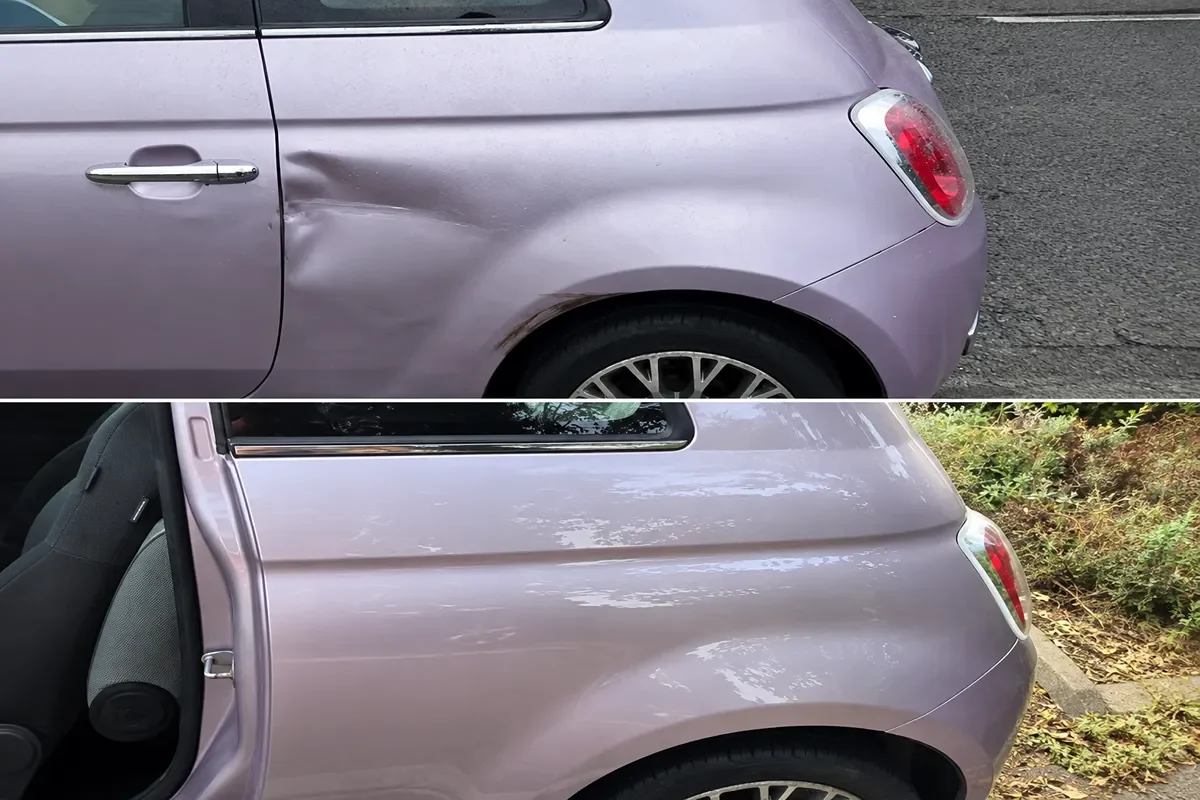
Car visible with body damage before and after repair
Does Car Body Damage Affect an MOT?
Yes, certain types of car body damage can affect an MOT result, but the presence of a dent, scratch or damaged panel does not automatically mean that your vehicle will fail.
An MOT is primarily concerned with whether your vehicle meets the required road safety and environmental standards. When it comes to the body of your car, the tester is therefore interested in problems that could affect safety rather than whether the paintwork looks perfect.
According to the current DVSA MOT inspection manual, body panels and components are inspected for issues including damage, corrosion and security. A damaged or corroded body component that is likely to cause injury can be classed as a major defect, while a component that is likely to become detached can be considered dangerous.
This means there is an important difference between cosmetic car body damage and damage that potentially affects the safety or structural condition of the vehicle.
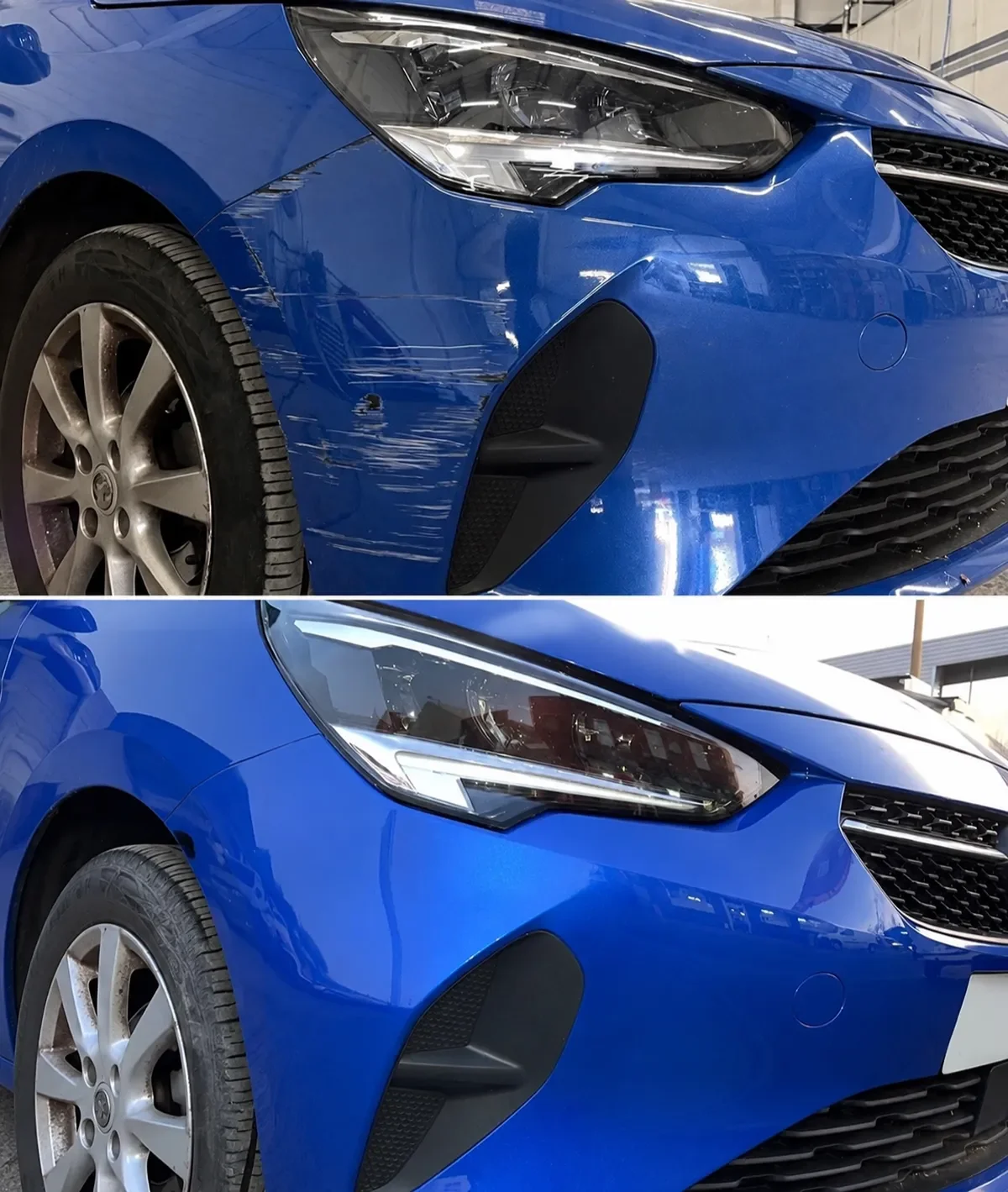
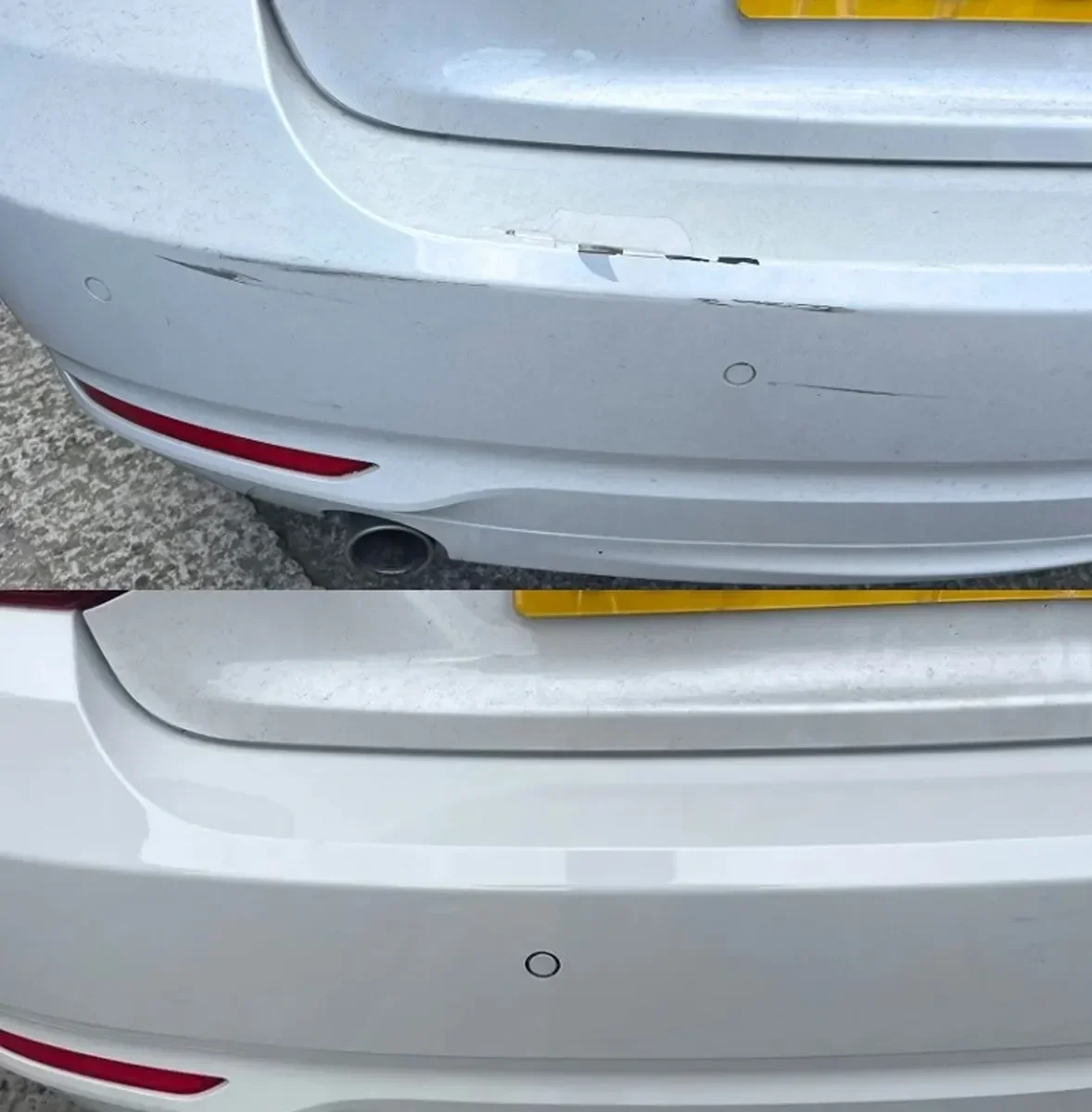
Cracked & scuffed bumper before and after repair
Cosmetic Damage vs MOT-Related Damage
Many of the marks that make us want to visit a body shop are cosmetic.
Examples can include:
Small parking dents
Light scratches
Minor bumper scuffs
Stone chips
Faded paintwork
Small areas of cosmetic paint damage
Providing there are no associated safety issues, cosmetic imperfections alone are not necessarily an MOT failure.
The situation changes when damage affects the condition, security or safety of a component.
For example, a bumper that has a superficial scuff is very different from a bumper that is badly damaged or insecure. Likewise, a small dent in a door is different from damage that prevents a door from functioning correctly.
If your vehicle has been involved in an accident, it is therefore sensible to look beyond how the damage appears.
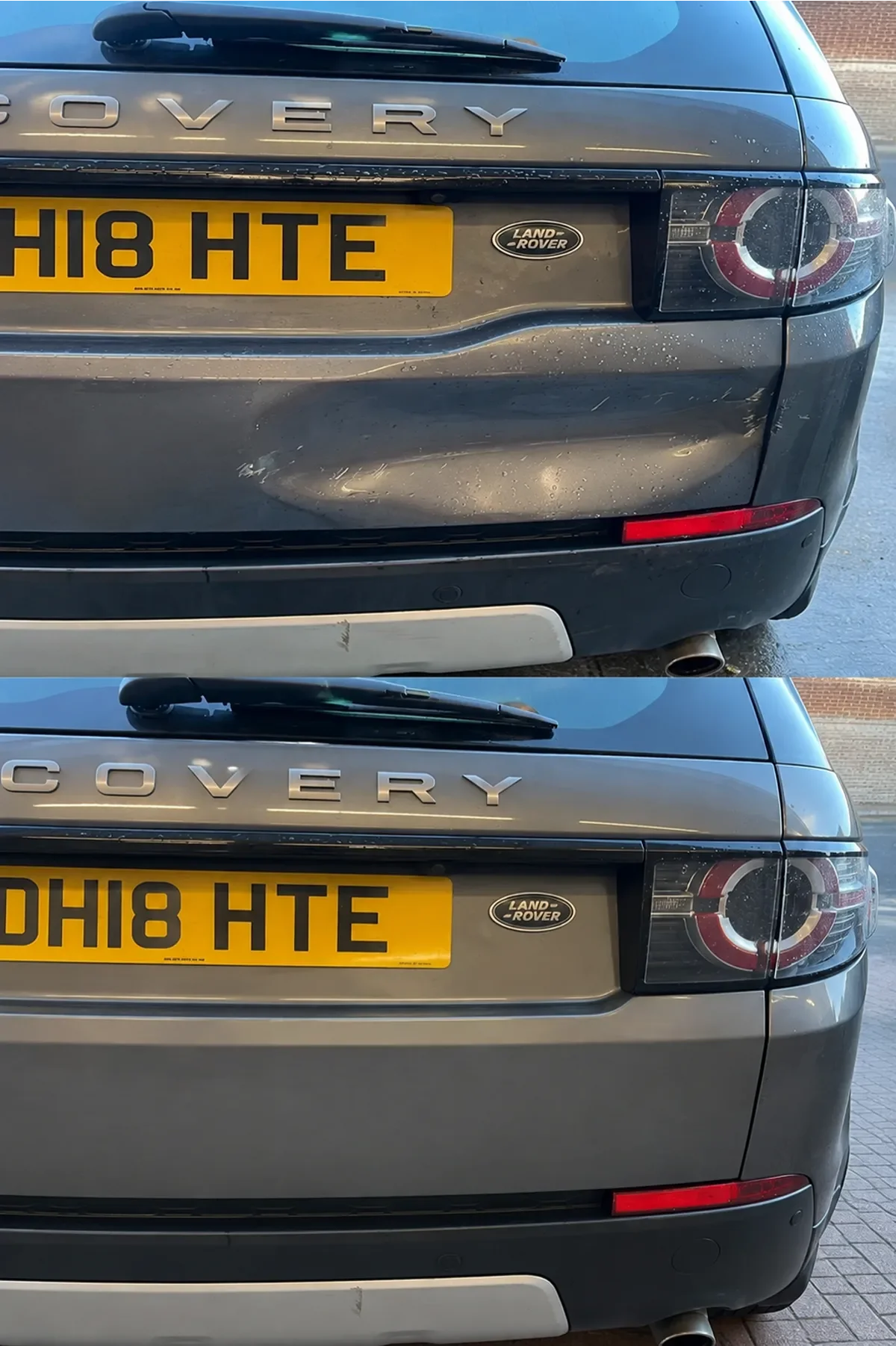
Accident repair in CPR Liverpool Body Shop
Can a Damaged Car Bumper Fail an MOT?
A bumper can potentially cause an MOT problem depending on its condition.
A light scrape, paint scuff or cosmetic mark on a bumper is very different from a bumper that has been badly cracked, partially detached or left insecure after a collision.
The MOT inspection manual includes specific inspection requirements for bumpers as part of the vehicle's structure and attachments.
If your bumper has been damaged, check whether:
It is still securely attached
Any part of it is hanging loose
The damage has created dangerous projections or edges
The collision appears to have damaged components behind the bumper
A modern bumper is more than a painted piece of plastic. Depending on the vehicle, there may be mounting points, reinforcement structures, parking sensors, cameras or other equipment in and around the bumper area.
This is why what appears to be straightforward bumper damage can sometimes warrant a professional inspection.
At CPR Car Body Repairs Liverpool, we regularly see vehicles where the visible damage tells only part of the story. Assessing the complete damaged area allows the appropriate repair method to be considered rather than simply focusing on appearance.
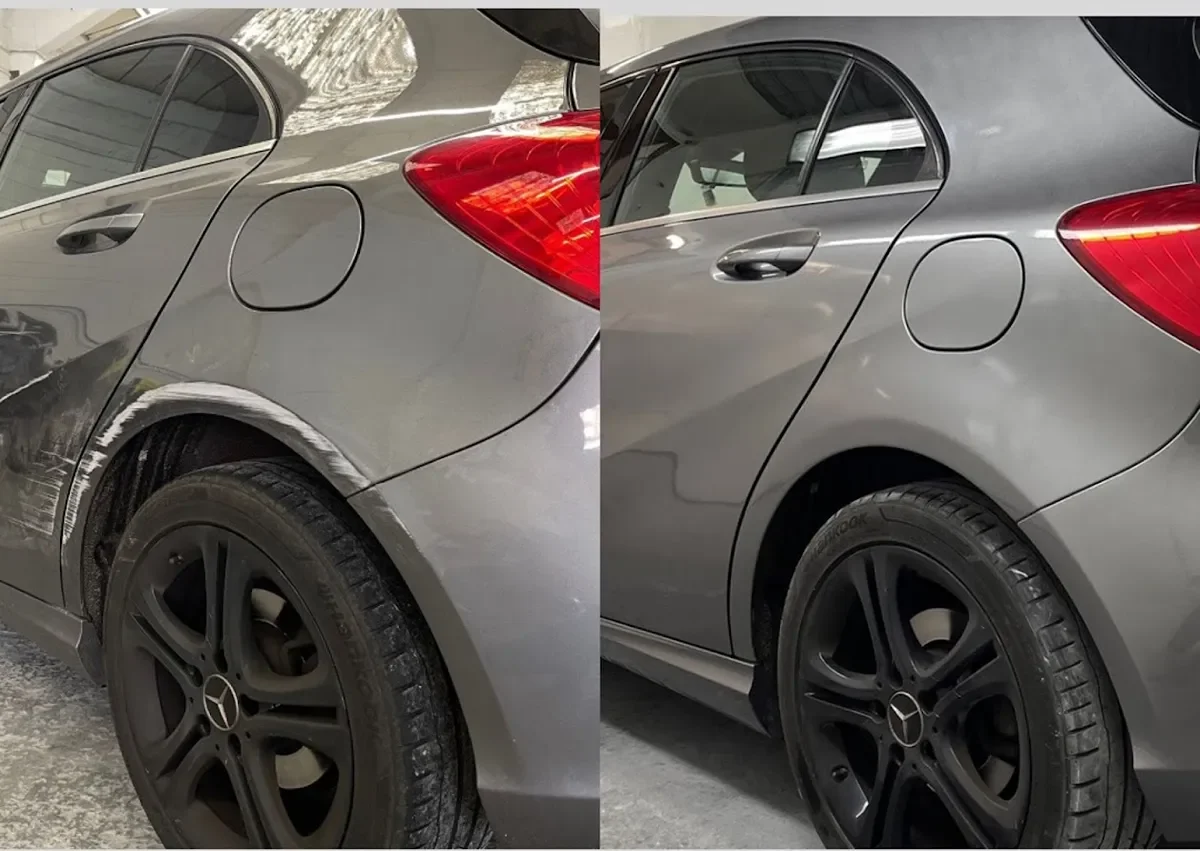
Advanced car scuff damage before and after repair at Liverpool Body Shop
Can Dents Cause an MOT Failure?
A small dent does not automatically cause an MOT failure.
Many dents are primarily cosmetic, particularly the familiar small parking dent caused by another car door or a shopping trolley.
However, the location, severity and consequences of the damage matter.
A dent deserves closer attention if it has:
Seriously distorted a body panel
Affected the operation of a door
Created a dangerous edge
Caused a panel or component to become insecure
Occurred as part of more substantial collision damage
This is one reason it is useful to distinguish between a simple cosmetic dent and accident damage.
Some minor dents where the paint remains intact may be suitable for Paintless Dent Removal (PDR). Other dents involving stretched metal, sharp creases or damaged paint may require conventional body repair and refinishing.
If you are unsure, getting the dent assessed before your MOT gives you time to decide what needs repairing rather than discovering a potential problem at the test.
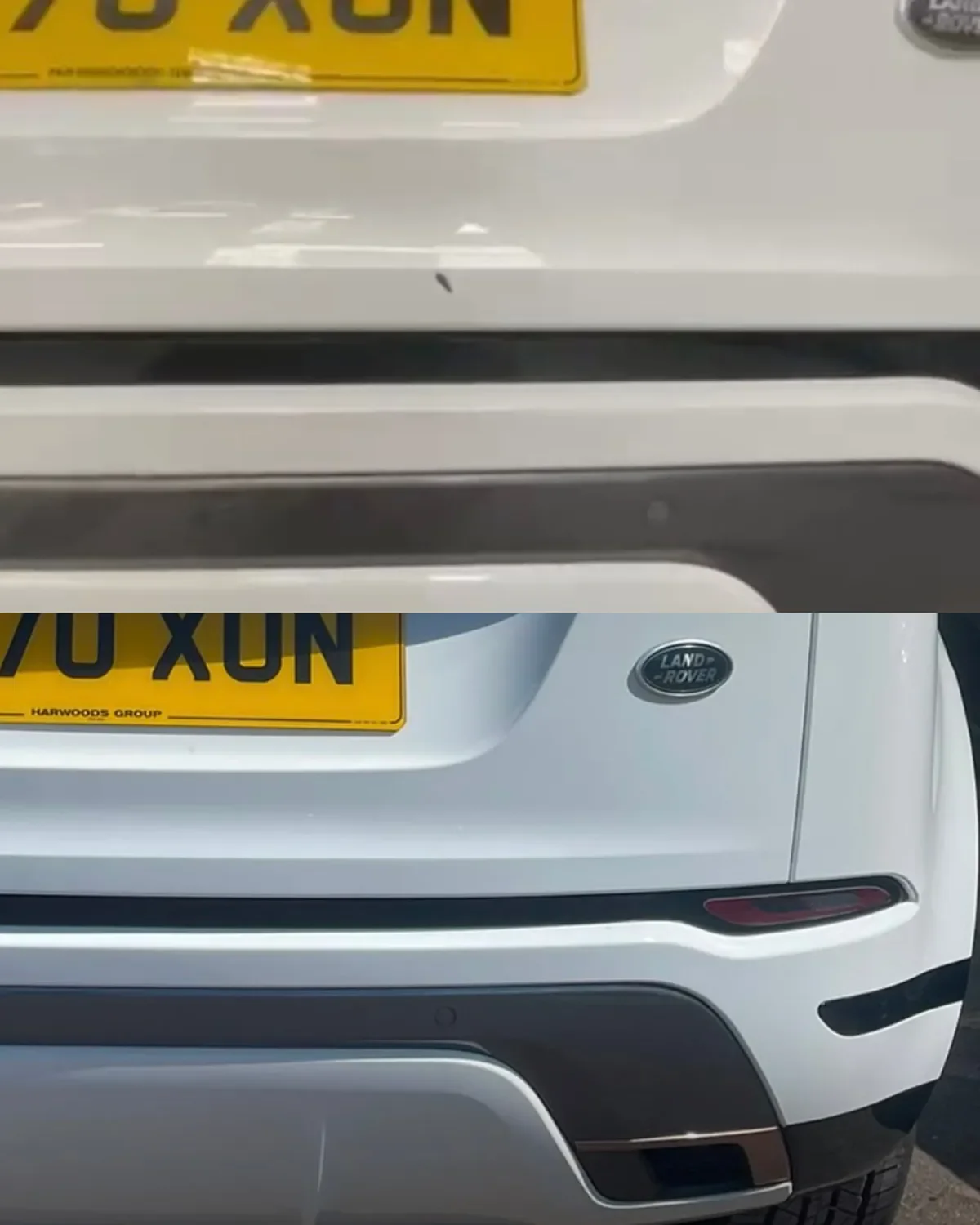
Car Scratch repaired at CPR Liverpool Body Shop
Can Rust Make Your Car Fail Its MOT?
Rust is one of the most important bodywork issues to take seriously.
Not every patch of surface rust means an MOT failure. What matters is where the corrosion is located, how extensive it is and whether it affects an important part of the vehicle.
The DVSA guidance specifically explains that even a relatively small amount of corrosion can make a vehicle unsafe if it compromises the load-bearing capacity of an important part of the structure. Conversely, more extensive corrosion on some non-structural areas may have little effect on safety.
This is why two apparently similar areas of rust can have very different implications.
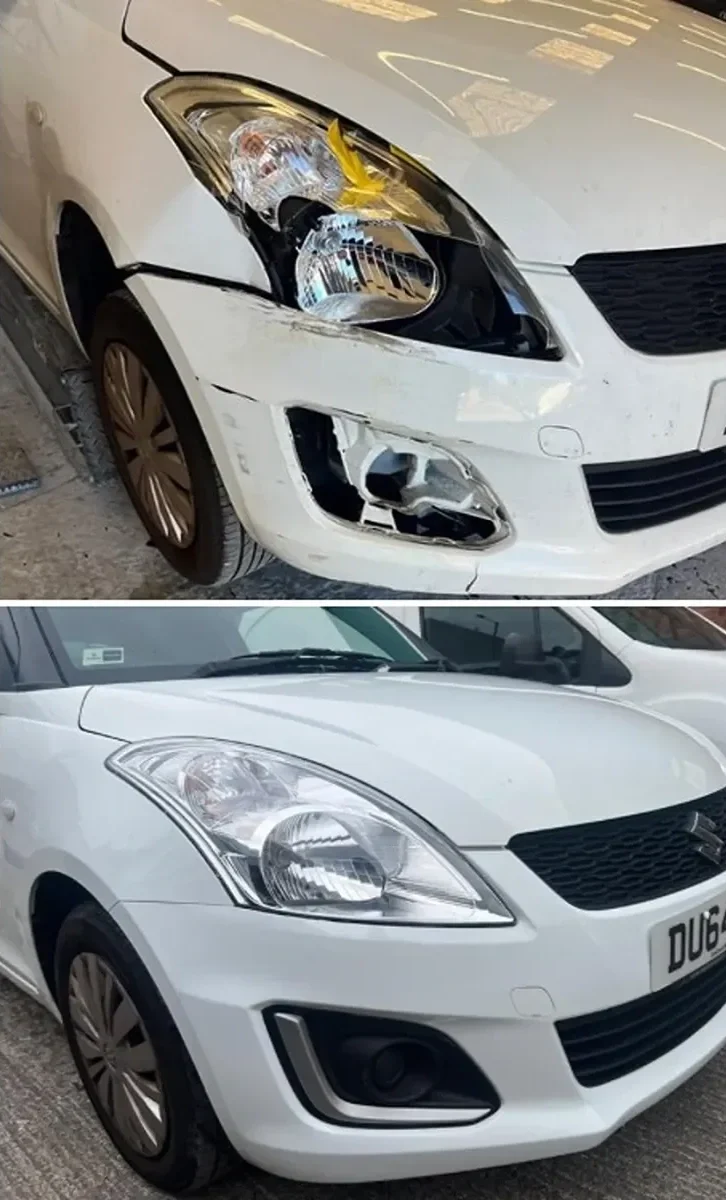
Extensive car accident damage repaired at CPR Liverpool
Watch for Early Signs of Corrosion
Don't wait until rust has developed into an obvious hole.
Early warning signs can include:
Paint bubbling
Flaking paint
Brown or orange staining
Corrosion around wheel arches
Rust around sills
Corrosion appearing beneath damaged paint
Rust developing around previous repairs
Liverpool's wet climate means that damaged paintwork should not simply be ignored indefinitely.
Once a stone chip, deep scratch or collision exposes the layers beneath the protective paint finish, moisture can contribute to corrosion developing.
Treating corrosion while it is relatively localised can also be considerably easier than waiting until a larger section requires repair.
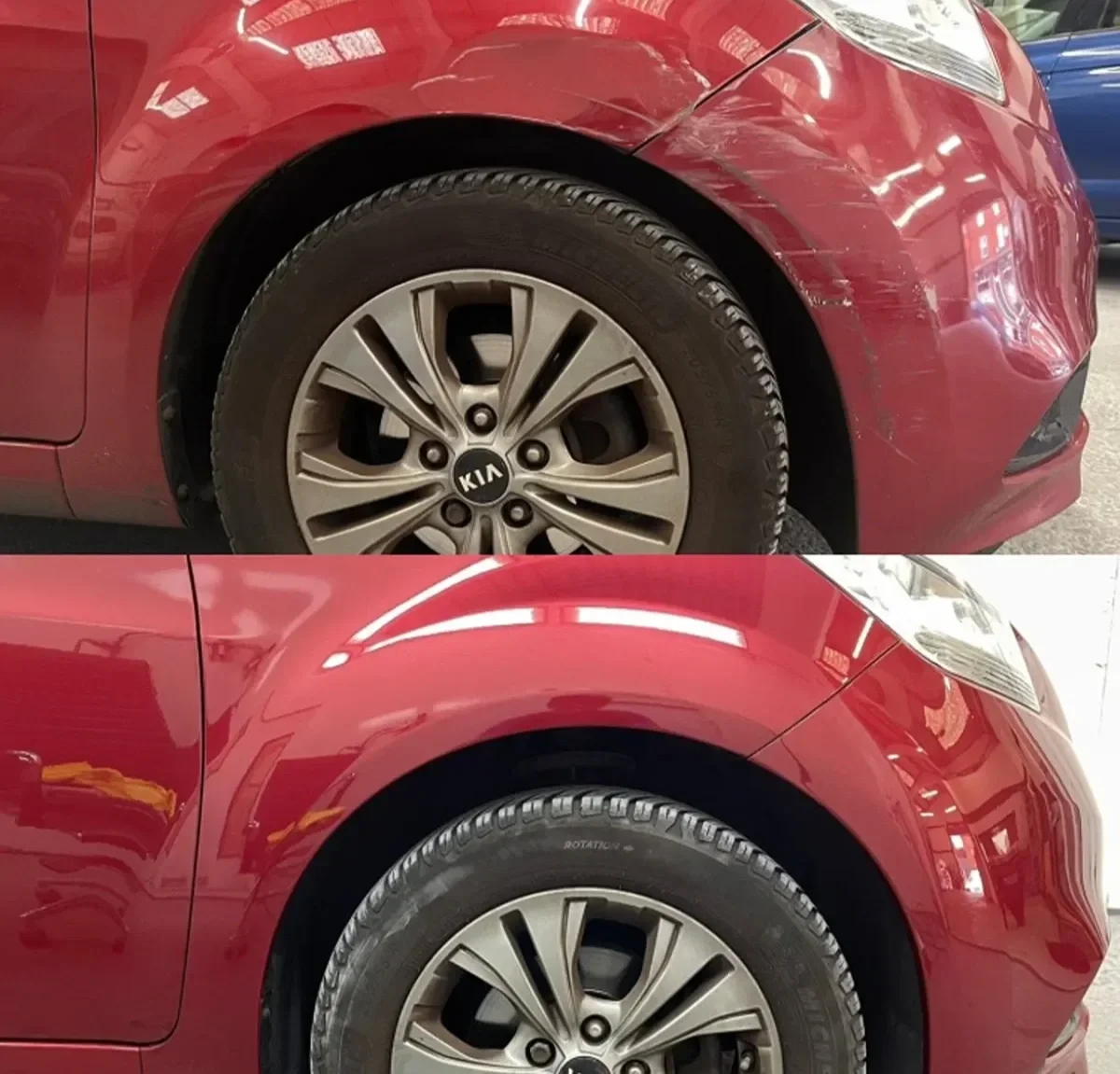
Will a dent fail your MOT?
Can Accident Damage Affect an MOT?
It certainly can, depending on the damage.
A minor scrape following a very low-speed incident might leave nothing more than cosmetic paint damage.
A more significant collision can affect much more.
After an accident, visible bodywork damage may be accompanied by problems with:
Bumpers
Panels
Doors
Lights
Wheel alignment
Suspension
Structural areas
Safety-related components
The key point is that you cannot always judge the seriousness of accident damage simply by looking at the paint.
A professional body shop assessment can help establish what has actually been damaged and whether the vehicle needs further investigation or repair.
If an accident happens shortly before your MOT, don't automatically assume that because the car still drives normally everything will pass.
Get significant damage checked first.
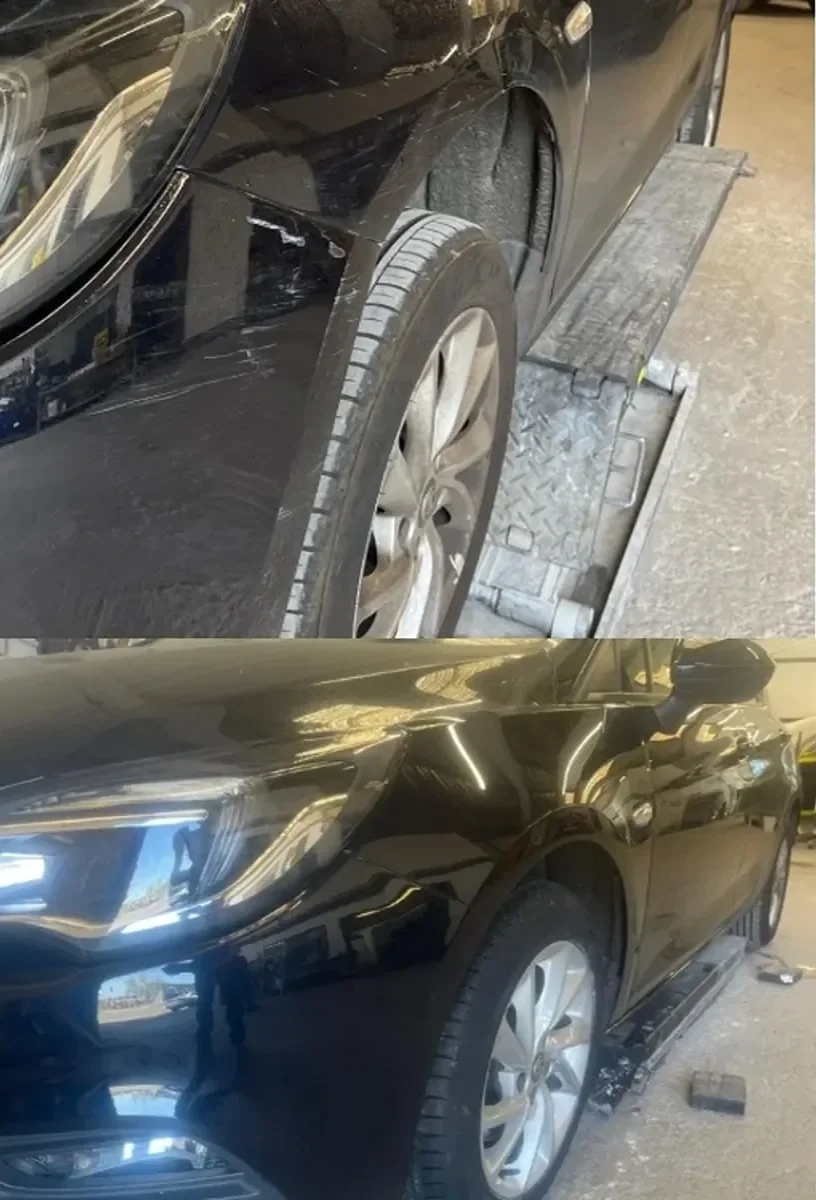
Get it checked before the MOT
Damaged Doors and Your MOT
Doors are another area where the difference between cosmetic and functional damage matters.
The MOT inspection manual includes specific checks relating to doors and door catches.
A dented door that still opens, closes and secures correctly presents a very different situation from a door that has been badly distorted in a collision.
After door damage, check whether it:
Opens correctly
Closes completely
Remains securely closed
Has become badly misaligned
Has sharp or dangerous damaged areas
If the door is difficult to close after an accident, don't simply force it and assume everything is fine.
Panel alignment can provide an important clue that the impact caused more than superficial paint damage.
What About a Damaged Boot or Tailgate?
The same principle applies to your boot or tailgate.
A cosmetic dent isn't necessarily an MOT issue, but a panel that cannot be secured correctly can be.
The DVSA inspection criteria state that a boot lid, tailgate or certain other access panels that cannot be secured in the closed position can constitute a major defect.
So if someone has driven into the back of your vehicle and the boot no longer closes correctly, don't wait until MOT day to investigate it.
Have the damage assessed.
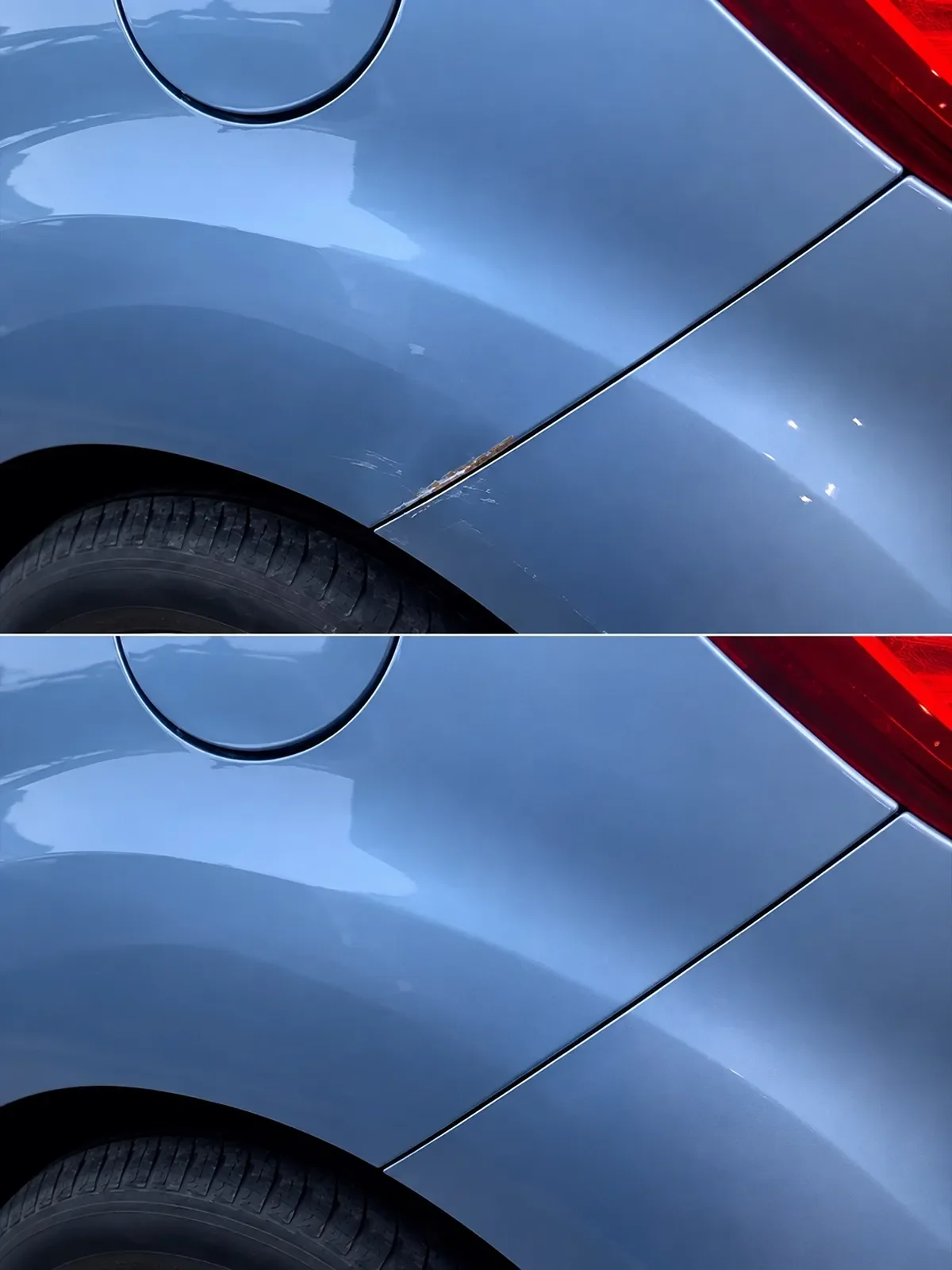
Rust in paintwork can matter
Can Scratches Fail an MOT?
Normally, a straightforward cosmetic scratch isn't the sort of problem people associate with an MOT failure.
But that doesn't mean scratches should always be ignored.
A superficial mark in the clear coat is very different from deep damage that exposes the layers beneath the paint.
From a body-repair perspective, deeper scratches are worth dealing with because leaving bare metal exposed can allow corrosion to develop.
The MOT issue is therefore less about having immaculate paintwork and more about preventing minor damage from developing into something more serious.
This is particularly relevant if you plan to keep the car for several years.
Repairing a deep scratch early can help protect both the appearance and condition of the panel.
What About Sharp Edges After an Accident?
This is an important one.
The DVSA inspection criteria specifically address damaged or corroded body panels or components that are likely to cause injury when someone comes into contact with them. Such a defect can be categorised as major.
Therefore, don't assume that a damaged panel is acceptable simply because the vehicle still drives.
If an accident has left:
Torn metal
A broken panel
A dangerously protruding section
A damaged component that could cause injury
have it inspected and repaired appropriately.
This can apply to apparently localised accident damage as well as more substantial collisions.
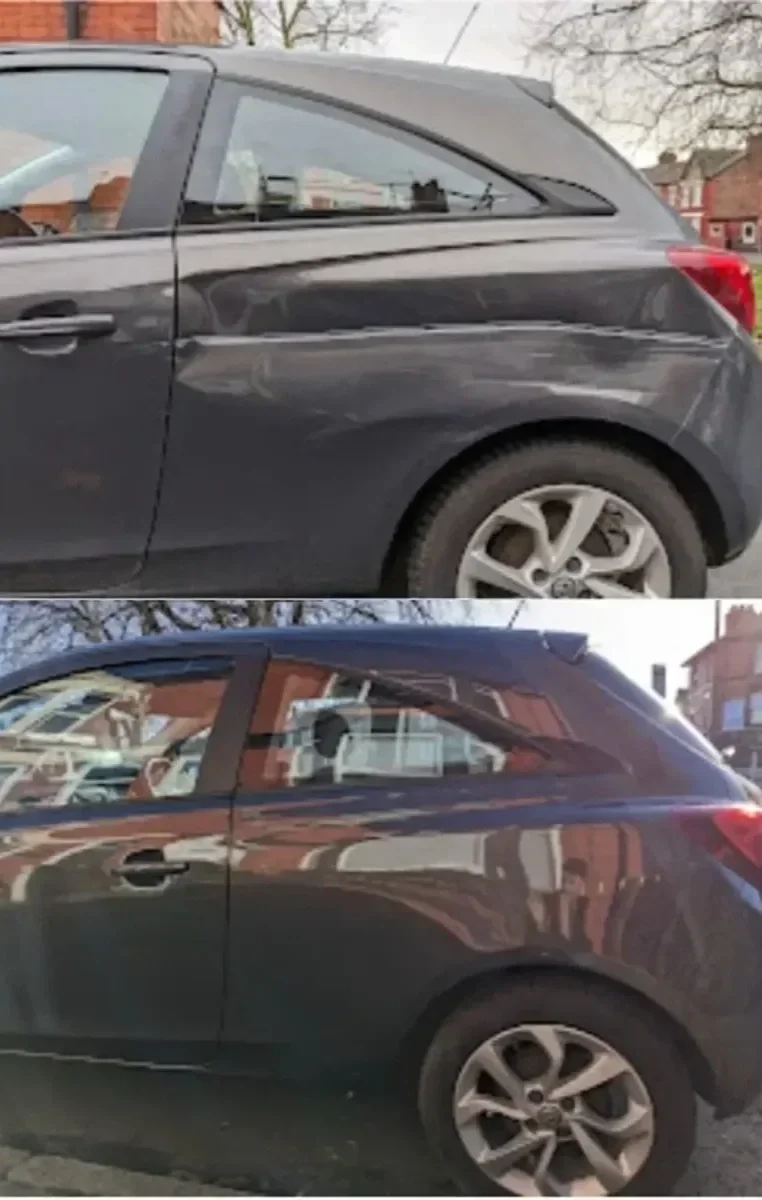
Repaired & road ready
Can Loose Body Panels Cause an MOT Problem?
Yes.
An insecure panel or component is much more concerning than a simple cosmetic blemish.
The MOT manual distinguishes between body components that are damaged or insecure and those that may become detached, with the latter potentially receiving a dangerous defect classification.
If something is loose after an accident, don't attempt to get through an MOT hoping it won't be noticed.
More importantly, don't continue driving if you believe part of the vehicle could detach.
Get professional advice.
Does Previous Car Body Repair Affect an MOT?
Having previously repaired bodywork does not mean your car will automatically have an MOT problem.
Cars are repaired every day following accidents, dents, corrosion and other damage.
What matters is the condition of the vehicle now and, where structural repairs are involved, whether the repair has restored the necessary strength and integrity.
This is one reason quality workmanship matters.
A professional body repair isn't simply about making the outside of the car look attractive. The appropriate repair method needs to be used for the type of damage involved.
For cosmetic work, that might mean careful preparation, colour matching and refinishing.
For more substantial repairs, the work can involve panel repair or replacement, welding and other specialist processes.
Could a Cracked Bumper Fail an MOT?
Can Poor-Quality Repairs Create Problems?
Potentially.
A quick cosmetic cover-up doesn't necessarily deal with what caused the problem underneath.
Rust is a good example.
Painting over corrosion without properly treating the affected area may temporarily improve its appearance, but it doesn't necessarily resolve the underlying deterioration.
Similarly, accident damage should be properly assessed rather than simply filled and painted if more substantial work is required.
The cheapest repair is therefore not always the best value.
Ask what repair method is being proposed and why it is appropriate for your vehicle.
Should You Repair Body Damage Before an MOT?
If the damage is purely cosmetic and you know it has no safety implications, you may not need to repair it specifically for the MOT.
However, if you aren't sure whether the damage could affect the test, getting it assessed beforehand is the sensible option.
This is particularly worthwhile when you have:
Significant accident damage
A loose bumper
Badly damaged panels
Rust or corrosion
A door that isn't operating normally
A boot or tailgate that doesn't secure properly
Sharp or protruding damaged areas
It also gives you time to arrange repairs properly rather than trying to find a body shop immediately after an MOT failure.
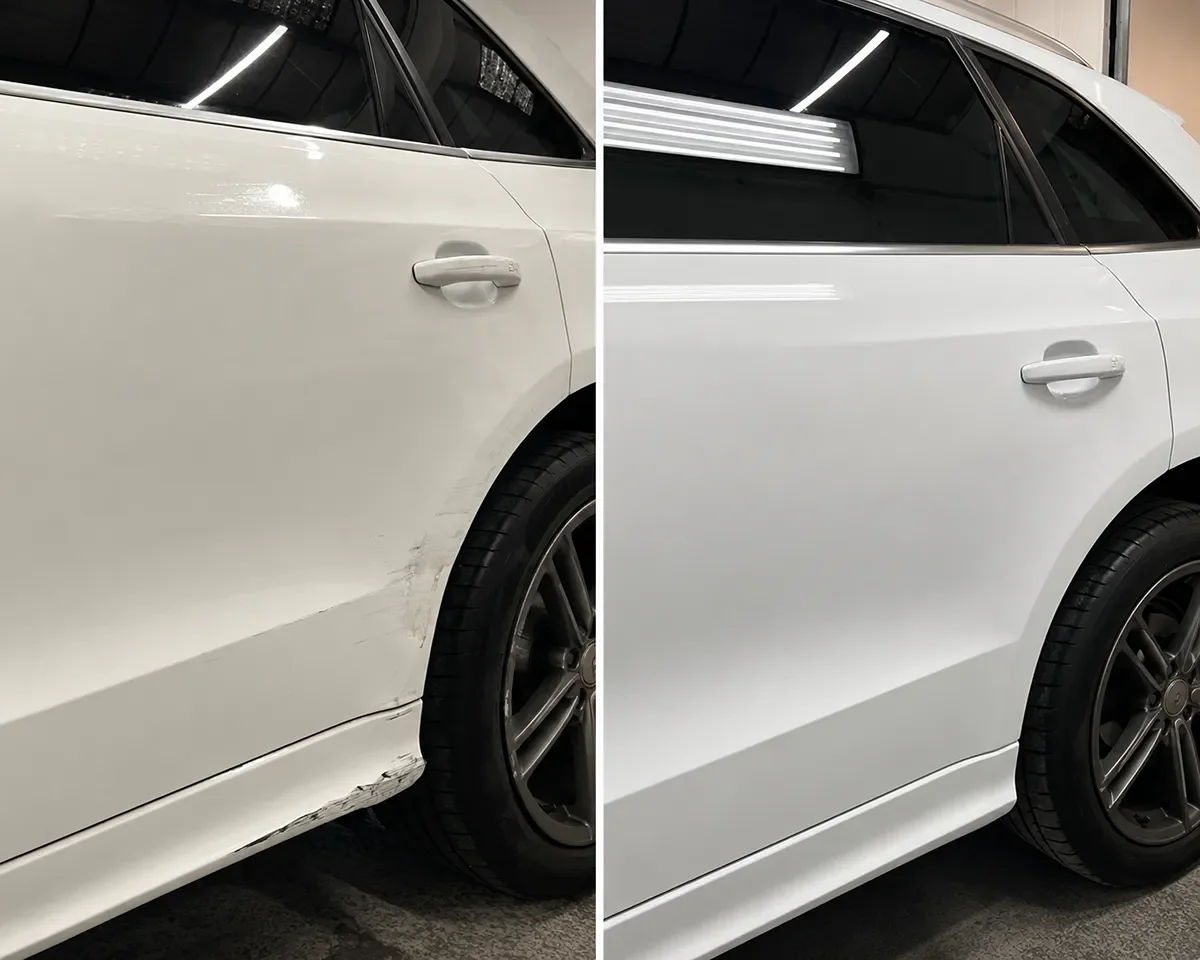
Could Sill Damage Fail an MOT?
Don't Wait Until the Night Before Your MOT
Planning ahead makes life considerably easier.
If your MOT is due soon, take a few minutes to walk around your vehicle in daylight.
Look at:
Front and rear bumpers
Doors
Wings
Sills
Wheel arches
Boot or tailgate
Visible areas of corrosion
Areas previously damaged in an accident
You aren't trying to conduct your own MOT.
You're simply looking for obvious bodywork problems that deserve professional attention.
If you see something that concerns you, arrange an assessment early.
Will an MOT Tester Tell Me How to Repair the Damage?
An MOT test determines whether the vehicle meets the relevant test requirements at the time of inspection.
It isn't the same as receiving a detailed body-shop repair plan.
If bodywork is identified as a problem, a professional body repairer can then assess the damage and discuss the appropriate repair method with you.
That may involve anything from securing or replacing a damaged component to repairing corrosion or carrying out more substantial accident repair.
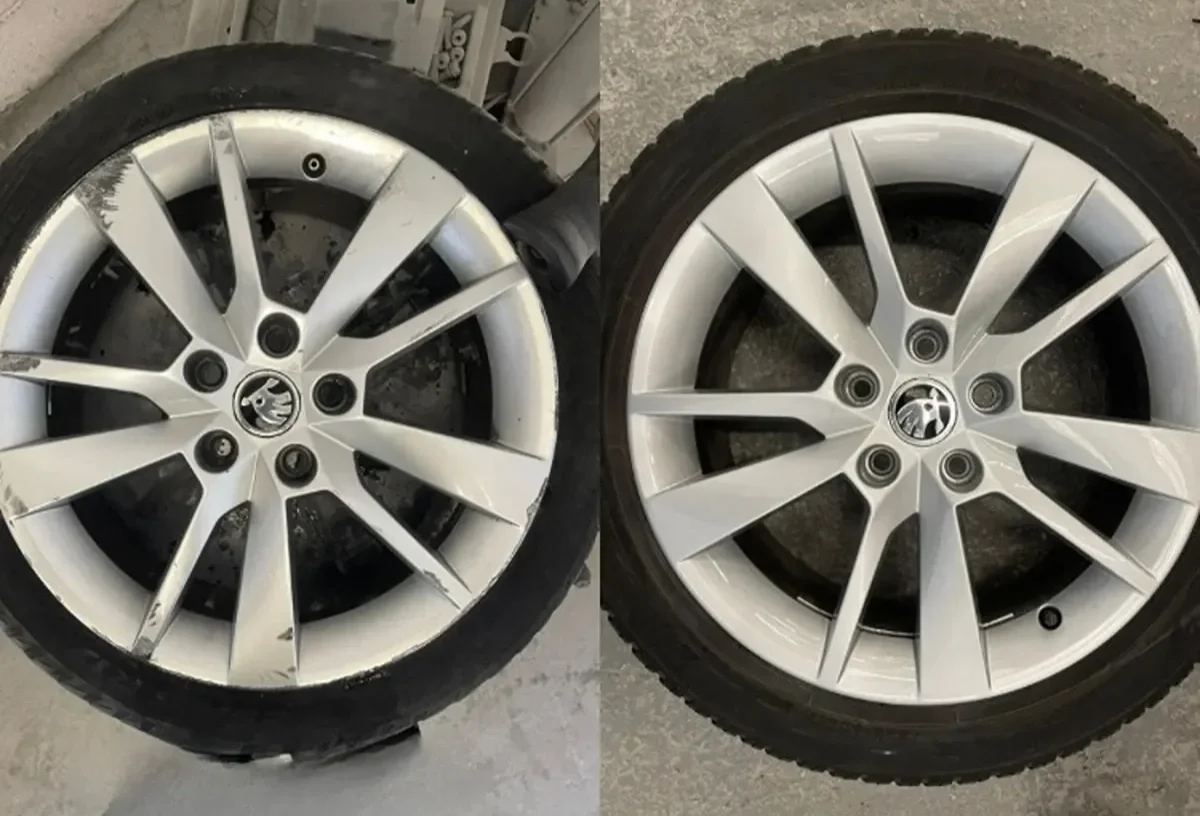
Alloy Wheel Damage & Your MOT
MOT Failure vs Car Body Appearance
This distinction is worth repeating because many motorists understandably worry about every dent and scratch before an MOT.
Your car does not have to look showroom-perfect to pass an MOT.
A ten-year-old vehicle may have:
Parking dents
Stone chips
Minor scratches
Faded areas
Previous paint repairs
and still be perfectly serviceable.
What matters for the MOT is whether relevant defects fall within the inspection criteria.
So don't panic because your car has a small dent.
Equally, don't dismiss badly damaged or corroded bodywork as “only cosmetic” without checking it.
Why Repair Cosmetic Damage Anyway?
Even when damage isn't an MOT issue, there can still be good reasons to repair it.
Protect Your Car's Value
Visible dents, scratches and damaged paintwork can make a vehicle less attractive to potential buyers.
A well-presented car can also create the impression that it has been cared for properly.
Prevent Corrosion
Deep scratches and paint chips can expose underlying material to moisture.
Repairing the damage can prevent deterioration spreading.
Avoid Lease-Return Charges
If you lease your vehicle, damage that doesn't cause an MOT failure could still fall outside the leasing company's acceptable fair-wear-and-tear standards.
Take Pride in Your Vehicle
Sometimes the reason is simply that you want your car to look good.
There is nothing wrong with repairing cosmetic damage purely because it bothers you every time you see it.
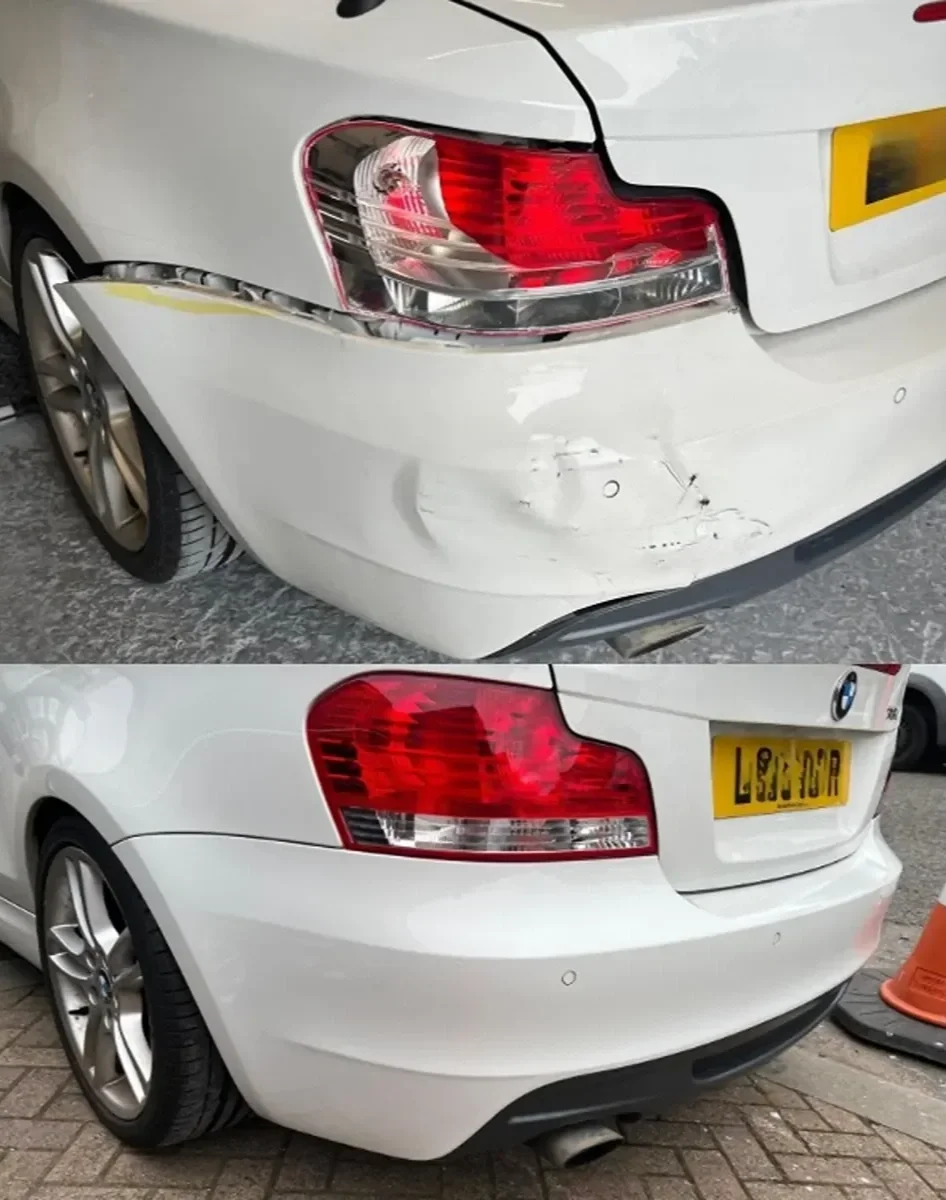
Could Crash Damage Fail an MOT?
Can I Repair MOT-Related Body Damage Myself?
That depends entirely on the damage.
Minor cosmetic maintenance is one thing. Structural corrosion, badly damaged panels, insecure components or significant accident repairs are very different.
If safety could be involved, this is not the place to experiment.
Professional body repairers have the tools and experience to assess what repair is appropriate.
A DIY job that hides the visible problem without dealing with the underlying damage can create additional expense later.
What Should I Tell the Body Shop?
Give the repairer as much information as possible.
Explain:
What happened
When the damage occurred
Whether the vehicle has been driven since
Whether anything feels different while driving
Whether any doors or panels have become difficult to operate
Whether the MOT is approaching
Whether an insurer is involved
Photos can also be useful for an initial discussion, although some damage may need to be inspected in person before an accurate repair plan can be provided.
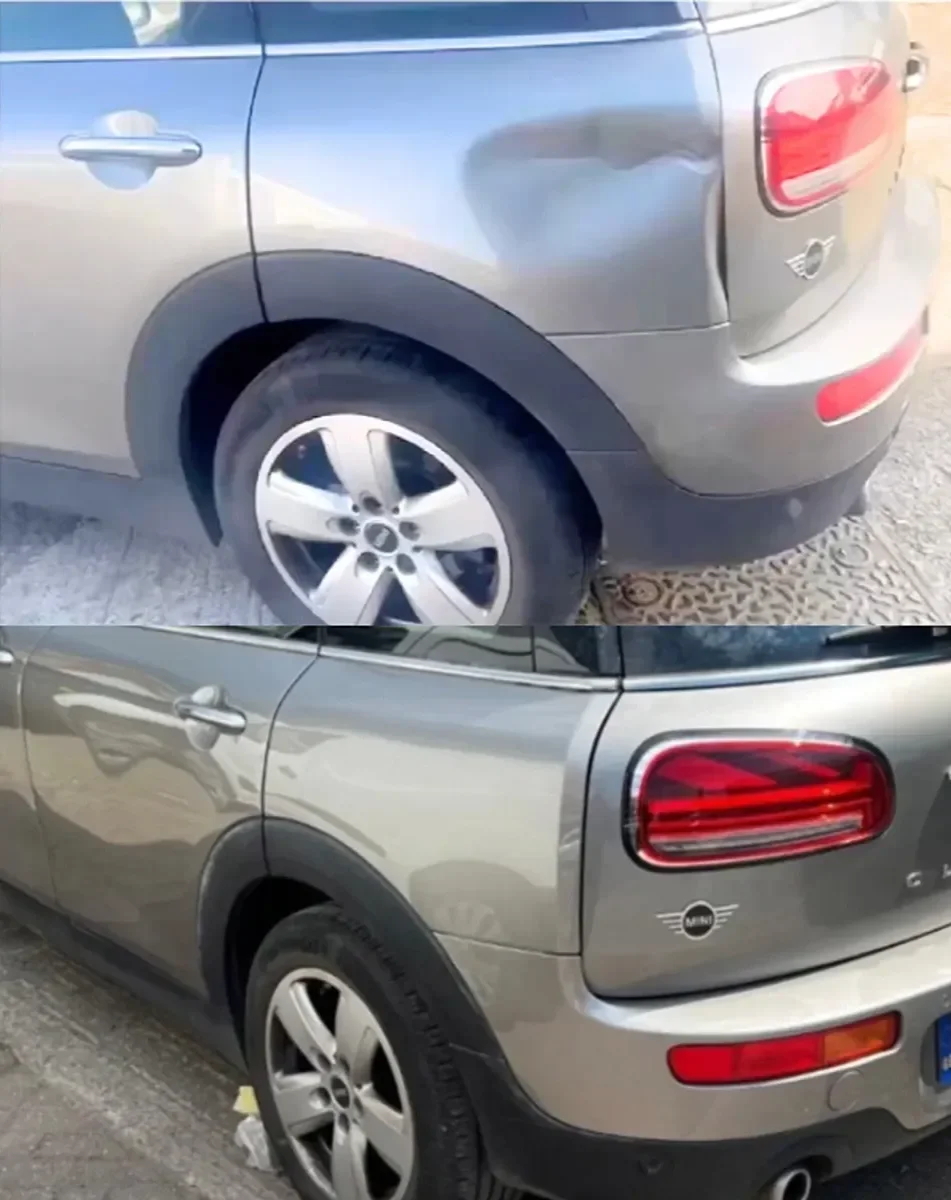
Could Crash Damage Fail an MOT?
Car Body Repair Before an MOT in Liverpool
If you're based in Liverpool and are concerned about body damage before your MOT, getting the vehicle assessed early can remove much of the uncertainty.
CPR Car Body Repairs works on a wide range of bodywork damage, including dents, bumper damage, scratches, paintwork, accident damage and restoration work.
The aim should always be to identify what actually needs repairing, rather than carrying out unnecessary cosmetic work simply because an MOT is approaching.
If the damage is cosmetic, you can make an informed decision about whether you want it repaired.
If the damage could affect safety or the vehicle's condition, you can deal with it before the test.
Frequently Asked Questions
Will a dent automatically fail an MOT?
No. A dent by itself does not automatically mean an MOT failure. Its location and severity matter, particularly if the damage creates a safety issue, affects another component or leaves part of the vehicle insecure.
Will a scratched bumper fail an MOT?
A cosmetic scratch or scuff isn't the same as a badly damaged bumper. The concern is whether the bumper or associated components are insecure, dangerous or otherwise fall within the MOT defect criteria.
Can rust fail an MOT?
Yes, corrosion can result in an MOT failure depending on its location and severity. Corrosion that compromises an important structural area can be particularly serious.
Can a loose bumper fail an MOT?
Potentially, yes. Bumpers are inspected under the MOT body, structure and attachments requirements. Have a loose or badly damaged bumper assessed before the test.
Does my car need perfect bodywork to pass?
No. The MOT is not a concours competition. Cosmetic imperfections do not automatically mean failure. The relevant question is whether the vehicle has defects covered by the MOT inspection requirements.
Should I repair a deep scratch even if it won't fail the MOT?
It can still be worthwhile. Deep paint damage can leave the underlying surface vulnerable to corrosion, and repairing it can protect the appearance and value of the vehicle.
Can accident damage fail an MOT?
Yes, if the resulting damage affects items or conditions covered by the MOT inspection. Significant accident damage should be professionally assessed rather than judged purely by appearance.
Should I book a body repair before or after my MOT?
If there is significant body damage, corrosion, an insecure component or anything you think could affect safety, get it assessed before the MOT. Purely cosmetic repairs can usually be planned according to your own priorities.
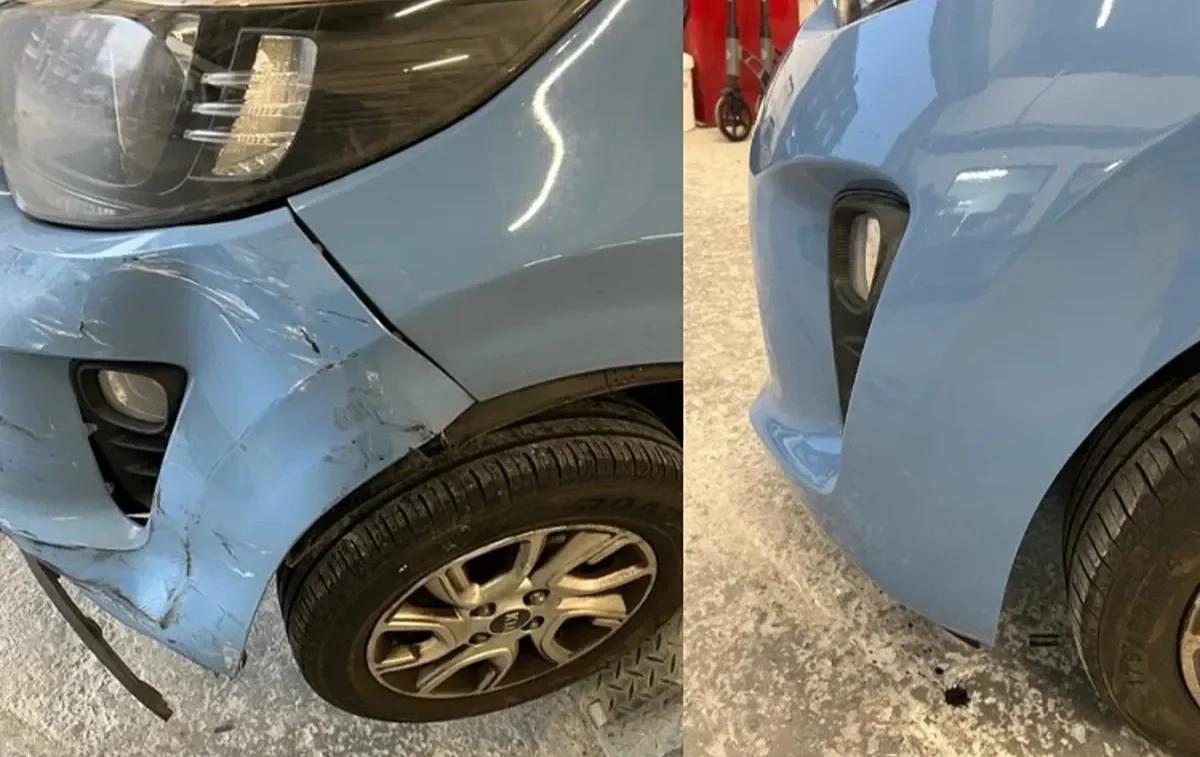
Extensive damage is dangerous for driving on the roads
The Bottom Line
A scratch, scuff or small dent does not automatically mean your car will fail its MOT. The important distinction is between cosmetic imperfections and damage that affects the safety, security or structural condition of the vehicle.
Pay particular attention to corrosion, insecure panels, damaged bumpers, doors that don't function correctly, bodywork that could cause injury and accident damage that may extend beyond what you can see. These are the situations where professional assessment becomes much more important.
If your MOT is approaching and you're unsure about damaged bodywork, arrange an assessment rather than guessing. Dealing with a genuine problem beforehand can save inconvenience on test day - while avoiding unnecessary repairs to harmless cosmetic marks.
At CPR Car Body Repairs Liverpool, we can assess damaged bodywork and explain the repair options available, helping you make an informed decision about what your vehicle actually needs.
Contact us today on the below links:
Call CPR Car Body Repairs today 0151 909 3457
See our website: CPR Liverpool
For your information, see our other blog posts:
The Ultimate guide to Liverpool Accident Repair
Liverpool Car Bumper Repair for Dummies
Expert Car Body Repairs vs DIY
Ultimate Guide to SMART Paint Repair in Liverpool
Drop us a quote request below - always happy to help!